
If you’re planning the Everest Base Camp trek, sooner or later you’ll type “Lukla flight weight limit” into Google, probably while staring at a half-packed duffel bag and wondering how any of it is going to fit.
Here’s the short answer. The Lukla flight weight limit is 15 kg per passenger in total. That’s usually split into 10 kg of checked baggage and 5 kg of hand carry. It’s not 15 kg checked plus a separate carry-on. Everything you bring, including your daypack, camera, and power bank, counts toward that one number.
That surprises a lot of people. Airlines flying long-haul to Kathmandu hand out 23 kg or more without blinking, and then a small mountain flight cuts you down to 15. Let’s go through why, and how to deal with it.
Why is the Lukla baggage limit so strict?
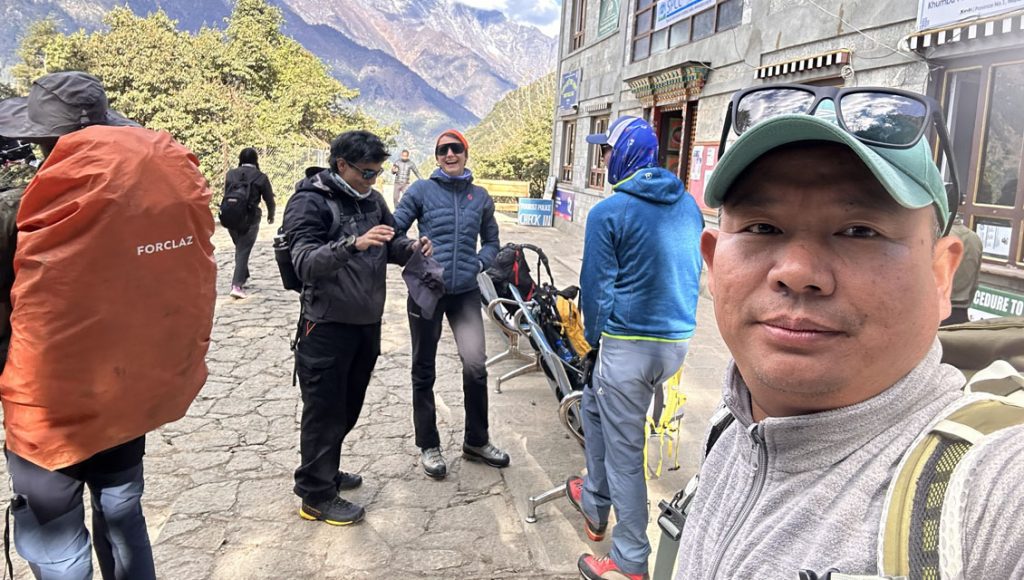
Lukla’s Tenzing-Hillary Airport has one short, sloped runway cut into a mountainside. The planes that fly there, like the Twin Otter, Dornier 228, and Let L-410, are small STOL aircraft (short take-off and landing) with tight payload limits. Every extra kilo affects how safely the plane can take off and land, especially in warm weather or thin air when performance drops.
So this isn’t the airline being difficult. It’s physics, and it’s the reason the rule is enforced at the check-in counter with an actual scale.
The 15 kg breakdown: checked bag vs. hand carry
Checked baggage is about 10 kg. This is your duffel bag or soft trekking bag with clothes, sleeping bag, and gear.
Hand carry is about 5 kg. This is your daypack, which should hold your passport, cash, phone, camera, medication, and anything valuable or fragile.
Some staff are relaxed about how the weight is divided as long as the total stays near 15 kg. Others weigh each piece separately. Don’t count on flexibility, and plan for the strict version.
What happens if you go over the limit?
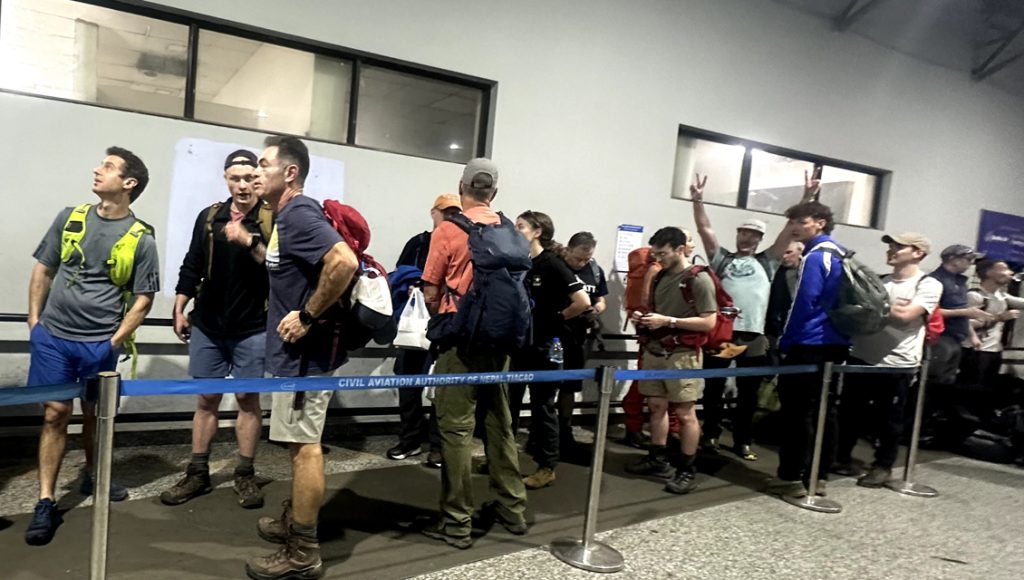
You have two realistic outcomes.
The first is that you pay for excess baggage. Most operators quote roughly USD 1 to 2 per extra kilo, paid at the airport counter on the morning of your flight. That’s cheap compared with international airline rates.
The second is that the airline puts your extra bag on a later flight. When a plane is close to its maximum weight, excess baggage is the first thing to come off. Your bag might arrive a few hours later, or the next day if the weather turns. Nobody wants their sleeping bag stuck in Kathmandu while they’re sitting in Lukla.
So paying for a few extra kilos is fine, but don’t put your essentials in the overweight bag.
Kathmandu or Ramechhap: does the limit change?
During peak trekking seasons (spring and autumn), many Lukla flights leave from Manthali Airport in Ramechhap instead of Kathmandu, to reduce air traffic congestion. The weight rules stay the same. What changes is your logistics: an early start, a few hours’ drive from Kathmandu, and less time to fix a packing problem at the counter. Pack and weigh everything the night before.
How to pack for the Lukla flight without freezing on the trail
Nobody wants to reach Namche Bazaar short of warm clothes, so here’s what works in practice.
Wear your heaviest items on the plane. Your trekking boots, down jacket, and fleece can all be worn or tied to your daypack. Clothing on your body isn’t weighed. Boots alone can save you a kilo or two.
Leave the non-essentials in Kathmandu. Most hotels and trekking agencies will store a bag for free or a small fee. Your city clothes, laptop, and spare shoes can stay there until you’re back.
Rent what you can. Sleeping bags, down jackets, and trekking poles can all be rented in Kathmandu or Namche, which saves weight and money.
Use a porter’s bag. If you’re trekking with a guide or porter, your main duffel goes to the porter and you carry only the daypack. Porter loads are usually kept to around 10 kg per trekker, so this doesn’t get you extra weight on the plane. The flight limit still applies to everything.
Keep the daypack for the important stuff. Medication, electronics, documents, cash, and your camera go in the daypack. If a bag is delayed, these are the things you can’t replace in the mountains.
What if you truly need to carry more?
If you’re bringing photography or video gear, or you’re on a longer expedition, you have a few options. You can pay the excess fees and accept a small risk of delay. You can ship non-essential weight ahead through your trekking agency. Or you can charter a helicopter, which allows more total weight and can be shared between a small group of trekkers. It costs a lot more, but it’s an option when the gear list can’t be cut.
Quick checklist before you fly
Weigh your bags at home with a luggage scale.
Aim for 14 kg total so you’re not gambling on the airport scale.
Put valuables and medication in your hand carry.
Keep a buffer day or two in your itinerary, since Lukla flights get delayed or cancelled for weather all the time.
And confirm the current baggage rules with your airline or trekking agency when you book.
Final thoughts
The Lukla flight weight limit is 15 kg, and the airlines do enforce it. The good news is that it’s easy to plan around. Pack light, wear your bulkiest layers, rent what you can, and keep your essentials with you. Do that, and you’ll step off the plane in Lukla stress-free and ready to start walking.